About Us Solutions Projects Case Studies Installations H₂ Hydrogen Power ● Current/OS ● Leadership Contact Talk to an Expert →

Real savings from real DC projects —
energy, carbon, copper & safety.

Every DesignWithDC installation is measured against the conventional AC design it replaced. These case studies show what changed — using the clients’ own design and operating data.

~2,880 t
CO₂ avoided every year
across the three projects below (WTC projected over 30 years)
Up to 59%
lower energy bills
DC distribution + sensor-based dimming
0%
net extra investment
savings on fixtures, wiring & protection offset controls
Near-zero
fire risk from wiring
low-voltage (<60 V DC), no AC joints

World Trade Centre, New Delhi

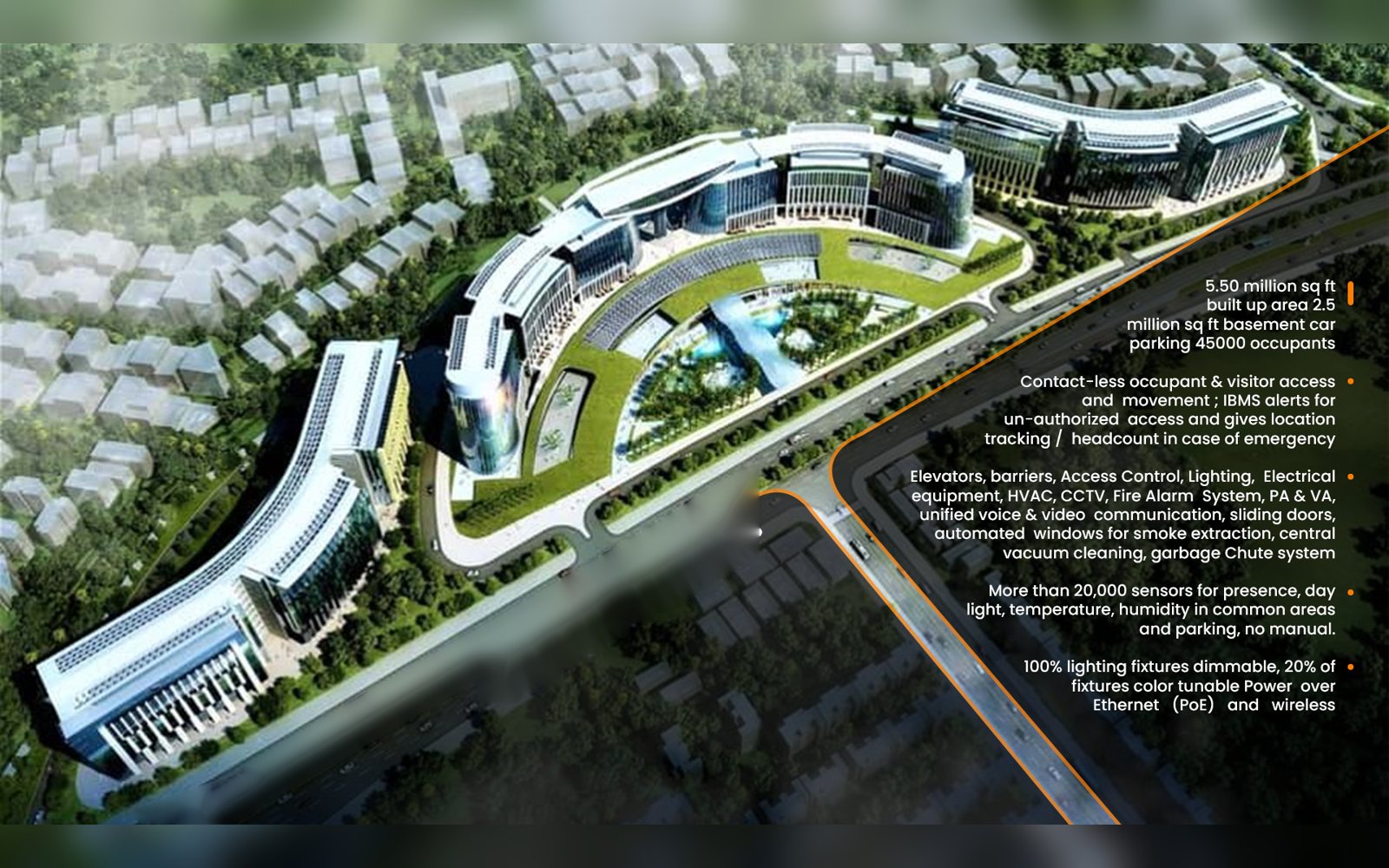
📍 New Delhi📐 5.5 million sq ft + 2.5 million sq ft basement parking👥 45,000 occupants🗓 Completed 2020
World Trade Centre, New Delhi

The scale

One of India’s largest smart commercial developments — around 35,000 LED fixtures across office towers and basement parking, with contact-less access for 45,000 occupants and every building system connected.

What we delivered

  • 48 V DC lighting over Cat6 — replacing 230 V AC wiring in conduit, earthing and protection switchgear.
  • 100% dimmable lighting driven by networked sensor data; 20% of fixtures colour-tunable, over Power over Ethernet and wireless.
  • 20,000+ sensors for presence, daylight, temperature and humidity in common areas and parking — no manual switching.
  • One integrated platform — lifts, access control, lighting, HVAC, CCTV, fire alarm, PA, unified voice & video, automated windows, smoke extraction and more.
59%
lower energy bill over 30 years
55%
less CO₂ over 30 years (~85,600 t avoided)
53%
lower maintenance & replacement cost
0%
net extra investment vs conventional AC

Load, energy & carbon (conventional AC = 100)

Conventional ACDesignWithDC DC

Cost of ownership (conventional AC = 100)

Conventional ACDesignWithDC DC
Same upfront budget. Networked DC controls with 100% sensor-based dimming add cost — but driverless fixtures (25% cheaper), Cat6 DC distribution (60% cheaper than AC wiring, earthing & switchgear) and lower fire-containment, earthing and protection needs offset it completely. Net extra investment: zero.
MetricConventional AC systemDesignWithDC DC system
Connected lighting load40 W per fixture25 W per fixture — 38% lower
Consumed load75% of connected load50% of connected load — 58% lower overall
Energy bill (30 years)Baseline59% lower
CO₂ emissions (30 years)Baseline55% lower — ~85,600 t avoided
Fixture life before replacement5 years7 years — 40% longer
Annual maintenance10% of system cost5% — 63% lower overall
OperationsManualComplete automation based on sensors
Failure feedbackNoneAlarms and alerts for failures
Predictive maintenanceNonePredictive maintenance alerts
Building Management SystemNot integratedComplete BMS integration
Fire loadHighReduced — Class-II wiring
MaintenanceDifficultEasy
Electrical safetyProne to electrical shocksTouch-safe installation

Standard Chartered Bank

📍 6th, 7th & 8th Floors, Siddha Tower, Kolkata🗓 Completed 2025💡 Intelligent Networked DC Lighting
Standard Chartered Bank, Kolkata

The brief

Reduce fire risk, cut energy use and CO₂ emissions in line with the bank’s global ESG mandate, and give the facilities team central scheduling and monitoring across three floors.

What we delivered

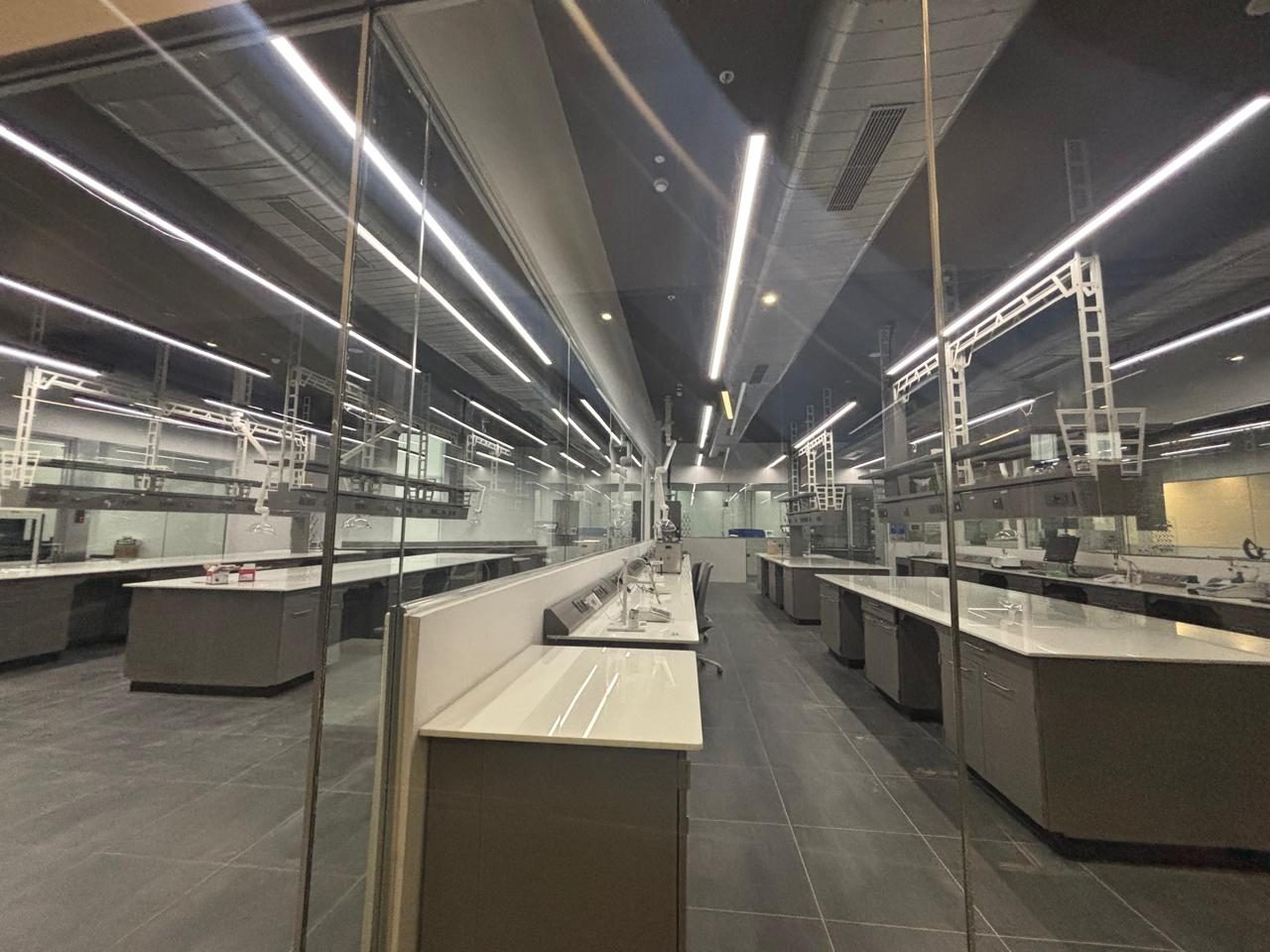
  • Centralised DC architecture — DCHUBs power and control driverless LED fixtures over Cat6 cable. No AC joints or in-line connectors in the ceiling void.
  • Low-voltage safety — under 60 V DC, so no arcing or overheating, and wiring stays safe during maintenance.
  • Sensor-led operation — occupancy and lux sensors dim lighting by daylight and presence.
  • One dashboard — live status of every light, sensor and emergency circuit; scenes adjusted on all three floors with one click.
6 t
CO₂ saved per year
40%+
energy saved annually
64%
less copper
48%
lower connected peak load

Conventional AC vs DesignWithDC DC system

Conventional ACDesignWithDC DC

Energy used on a working day (13 operating + 11 non-operating hours)

Moving to DC alone cut daily use by 24%; adding occupancy & daylight sensing took it to 40%.

MetricConventional systemDesignWithDC DC system
CO₂ emission (annual)Baseline6 t saved every year
Copper usage~634 kg~226 kg — no drivers in fixtures, limited switchgear, less earthing & cabling
Connected peak load20 kW10.4 kW (8.4 kW with dimming)
Working-day energy200 kWh120 kWh
Fire risk due to wiringModerate – HighNear-zero
Central monitoringNoneSingle dashboard with instant control of all floors

Zavenir Daubert India Pvt Ltd

📍 Binola, Gurugram📐 45,000 sq ft incl. outdoor campus🗓 Completed 2025
Zavenir Daubert HQ, Gurugram

The brief

For its new India corporate headquarters and plant — and being in the chemical business — Zavenir Daubert needed lighting that lowers fire risk, improves employee and material safety, cuts CO₂ and energy use, and keeps operations running.

What we delivered

  • Zero fire-risk wiring — Cat6/Cat7 from a central DC panel on the X-POE platform; no AC joints, and driverless fixtures run cool.
  • Built-in emergency lighting — central battery backup switches on instantly for exits, corridors and stairwells; priority lights stay on even during network faults.
  • Live safety monitoring — a dashboard shows every light, sensor and emergency circuit; sensors guide safe evacuation.
  • Linked to life-safety systems — during a fire alarm, scenes switch automatically to light escape routes.
20.9 t
CO₂ saved per year
23.2 MWh
energy saved per year
69%
lower one-time CO₂ footprint
709
LED drivers eliminated

Conventional AC (DALI) vs DesignWithDC DC system

Conventional ACDesignWithDC DC

Where the 20.9 t of annual CO₂ saving comes from

Energy saved: 16.6 MWh from smart dimming + 6.6 MWh from removing drivers = 23.2 MWh a year.

MetricConventional systemDesignWithDC DC system
CO₂ footprint (one-time)2.1 t0.66 t
CO₂ emission (annual)Baseline20.9 t saved every year
Energy (annual)Baseline23.2 MWh saved every year
Fire risk due to wiringModerate – HighNear-zero
Emergency light readinessUnreliableFully automated
Central monitoringNoneFull dashboard with alerts
Maintenance riskHigh (live AC circuits)Safe (low-voltage plug-and-play)

How these numbers are calculated

Figures compare the installed DC system with the conventional AC design for the same space. Energy savings combine removal of LED drivers (no AC-to-DC conversion) with lux- and presence-based dimming. CO₂ uses a coal-heavy grid factor of 0.9 kg CO₂ per kWh; one-time CO₂ covers copper in point wiring and earthing at 3.8 kg CO₂ per kg of copper.

Want numbers like these for your building?

We’ll model energy, copper and CO₂ savings for your project before you commit.

Request a savings assessment →